


Group CEO
Estienne de Klerk
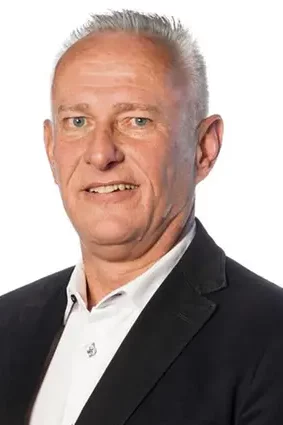
Norbert Sasse, Outgoing Group CEO of Growthpoint Properties
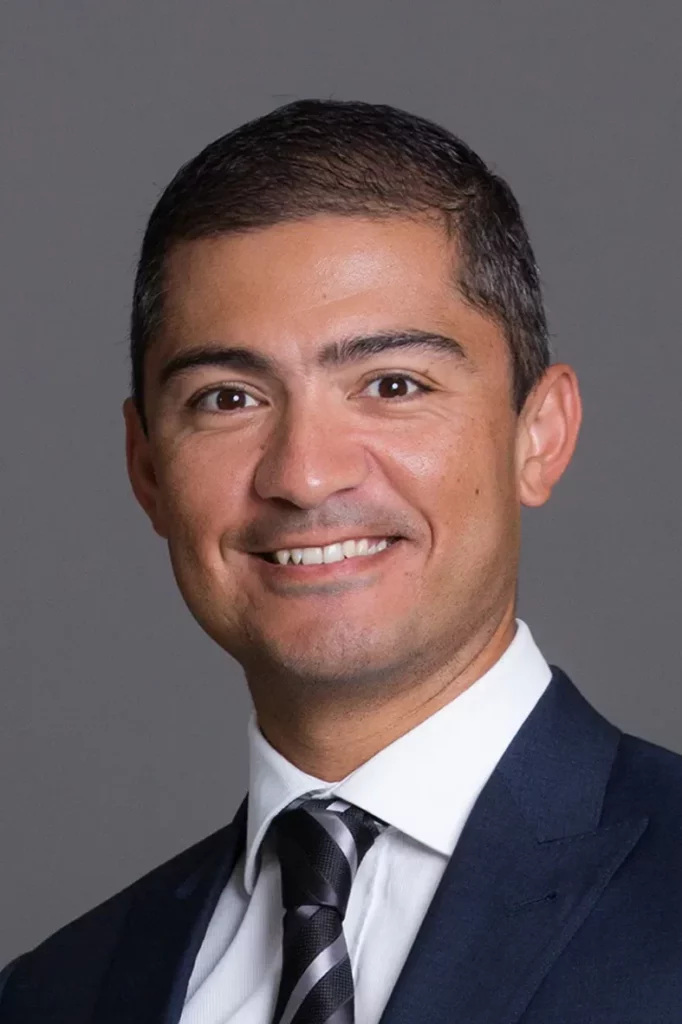
José Snyders, Group Chief Financial Officer of Growthpoint Properties
Growthpoint Properties enters its 2027 financial year with a stronger balance sheet, improving South African property fundamentals, and a substantial development pipeline, giving new Group CEO Estienne de Klerk a firmer platform to lead the REIT’s next phase of growth.
For the year ended 30 June 2026, South Africa’s largest primary JSE-listed REIT delivered distributable income per share (DIPS) of 152.6 cents, up 4.3% from 146.3 cents and reaching the top end of guidance. Dividend per share increased 7.4% to 133.5 cents, with the payout ratio increasing to 87.5%. Net asset value rose 3.8% to 2,131 cents per share.
The results mark the final financial year under Norbert Sasse, Outgoing Group CEO of Growthpoint Properties, who led the group through FY26 to 30 June.
Estienne de Klerk formally assumed the Group CEO role on 1 July 2026, at the beginning of FY27, following a structured succession process overseen by the Growthpoint board. Sasse remains with the company in an executive capacity until the end of December 2026 to support the transition.
De Klerk brings three decades of banking and listed-property experience and nearly 20 years with Growthpoint, having progressed through several senior executive roles before serving as CEO of Growthpoint South Africa.
A stronger balance sheet creates room to grow
Growthpoint’s total property assets increased 2.8% to R160.1 billion during FY26, supported by a 1.6% increase in property valuations.
More importantly, the group continued strengthening its balance sheet. Group loan-to-value improved to 38.7% from 40.1%, while the South African business’s SA REIT LTV reduced sharply to 30.2% from 34.5%.
Sasse says the group’s performance reflects years of disciplined capital management, with nearly R20 billion of assets recycled over the past decade.
“The balance sheet is robust with low gearing, strong liquidity and significant available funding,” he says, adding that Growthpoint is well positioned for its next phase of growth.
In FY26, Growthpoint sold 29 non-core properties for R4.9 billion, exceeding its R3.5 billion disposal target, while investing R1.3 billion in development and capital expenditure.
Over the past decade, the number of directly owned South African properties has fallen from 471 to 302, and gross lettable area has fallen 26%. The strategy has increasingly concentrated Growthpoint’s capital in higher-quality assets, stronger nodes and secure, well-managed precincts.
De Klerk has previously described effective capital rotation as a balancing act, requiring the group to continually assess where it can reduce overweight positions and redeploy capital into opportunities offering better long-term growth.
Disposals bring short-term dilution
The strategy, however, comes at a near-term cost.
Management acknowledged during the results discussion that many assets being sold generate yields above Growthpoint’s cost of debt. Disposing of these properties and temporarily using the proceeds to repay borrowings therefore dilutes distributable income until it can reinvest the capital.
The pace of disposals has also exceeded the pace of reinvestment, which is one reason Growthpoint has guided to more modest DIPS and DPS growth of between 1% and 3% for FY27.
The group intends to continue disposing of between R2 billion and R3 billion of suitable assets annually, using the proceeds to reduce debt, invest in stronger sectors and regions, and fund its development pipeline.
José Snyders, Group Chief Financial Officer of Growthpoint Properties, says this disciplined approach is creating greater financial flexibility.
“Growthpoint manages liquidity and leverage pragmatically and conservatively,” says Snyders, with disposal proceeds being used partly to reduce debt and create capacity for strategic investment.
SA property fundamentals continue to improve.
Growthpoint’s directly held South African portfolio is valued at R65.6 billion and contributed 55.7% of DIPS.
Overall vacancies improved from 8.2% to 7.2%, while like-for-like net property income increased 4.4%. Lease renewal success rose substantially from 68.2% to 80.7%, although renewal rental growth remained negative at -2.3%.
Logistics and industrial continued to stand out
Vacancies fell to their lowest level in a decade at 2.9%, with the Western Cape portfolio fully let and Durban vacancy at only 0.1%. Like-for-like NPI increased 4.9%, while portfolio value increased 6.5%.
Retail also continued its recovery. Vacancies declined from 5.3% to 3.5%, their lowest level since 2015, and like-for-like NPI increased 5.3%. Renewal success reached 90%, with rental renewal growth turning positive at 0.8%.
Office remains Growthpoint’s more challenging domestic sector
Like-for-like office NPI increased 3.1%, and vacancies improved to 14.1%, but rental reversions remained negative at -6.3%.
Growthpoint has consequently reduced its office exposure from 46% to 39% of South African portfolio value over the past decade, with much of the disposal activity focused on older buildings and weaker nodes.
Management also highlighted the significant divergence between Gauteng and the Western Cape, with coastal markets generally delivering stronger property performance.
Growthpoint’s response is increasingly precinct-led
“We are assessing all sectors through a precinct-led lens,” says Sasse, with scale and focused asset management being used to improve returns while mitigating municipal and infrastructure challenges.
V&A Waterfront remains a standout
The V&A Waterfront again delivered one of the portfolio’s strongest performances.
Total V&A NPI increased 21.6%, boosted by once-off development profits from the successful completion and transfer of the 5 Dock Road residential units.
Excluding residential sales, like-for-like NPI increased 6.9%. Excluding the impact of the Table Bay Hotel’s closure for redevelopment, like-for-like NPI growth would have reached 10.6%.
Vacancies across the precinct remain negligible at 0.9%, while visits increased 7% to 27 million. Retail sales rose 6.2% to R11.3 billion.
Office NPI increased 8.2%, marine and industrial NPI grew 13.7%, and operational income increased from 16% to 20% of the V&A’s income mix.
Management noted that this greater exposure to hospitality, tourism and operational income offers significant upside when visitor numbers are strong, although it also creates greater sensitivity to tourism cycles.
The Waterfront also has considerable development runway
The City of Cape Town Municipal Planning Tribunal has approved an application to increase development rights by 440,000m², providing capacity for significant future residential, hospitality, office and retail development.
“This future development in the V&A is extremely exciting for the precinct, the city and South Africa,” says Sasse.
Funding margins reach record lows
Growthpoint’s improving financial position has been reinforced by strong access to debt capital markets.
South African nominal debt declined to R33.4 billion from R39.1 billion, while the weighted average cost of debt reduced from 8.9% to 8.6%.
The group raised R1.8 billion through a public bond issue at a weighted average margin of ZARONIA plus 1.08%, the lowest margin Growthpoint has achieved in a bond auction.
After year-end, Growthpoint raised a further R3.1 billion through private placements at an average margin of ZARONIA plus 1.34%, with more than half secured at a 10-year tenor. The SA business also had R5.7 billion in unutilised committed debt facilities.
Management cautioned, however, that attractive margins do not necessarily translate into dramatically lower total borrowing costs while base interest rates remain elevated.
A meaningful reduction in South African base rates would therefore provide a considerably greater earnings benefit.
Development pipeline gathers momentum.
Growthpoint expects its South African development pipeline to average between R2 billion and R3 billion annually over the next five years.
For FY27, logistics and industrial developments account for around R1.4 billion, retail R500 million and offices R300 million.
Projects include Indlovu Logistics Park in Montague Gardens, Noka Park in Gauteng’s Riverfields logistics hub and Tecoma Park in KZN’s Cornubia Town, together with retail redevelopments at Paarl Mall, Walmer Park and Greenacres.
The Olympus Sandton mixed-use development, being undertaken with Tricolt, will include 528 high-end apartments, hospitality and restaurant components.
De Klerk has previously singled out KZN as a core investment region, pointing to high occupancy and sustained tenant demand as reasons Growthpoint remains comfortable deploying capital there.
Growthpoint Investment Partners is another growth avenue. It ended FY26 with R13.5 billion in assets under management, comprising R8.5 billion of healthcare assets and R5 billion of purpose-built student accommodation.
The healthcare platform has expanded significantly following the acquisition of Auria Senior Living, while Thrive Student Living is developing Hluma Studios adjacent to UKZN’s Howard College for the 2027 academic year.
Offshore assets remain a headwind
International investments still represent 35.6% of Growthpoint’s property assets and generated 22.1% of DIPS.
Growthpoint Properties Australia remains a core investment, with occupancy at 97% and a weighted average lease term of 6.1 years, but elevated Australian interest rates continue to constrain growth.
“Australia continues to stand out as a highly attractive investment environment,” says Sasse. However, he adds that finding growth is difficult in the country’s highest interest-rate environment in around 15 years.
The stronger rand also weighed on offshore contributions during FY26.
De Klerk takes Growthpoint into its next chapter
Against this backdrop, Growthpoint’s 1% to 3% FY27 DIPS and DPS growth guidance is deliberately measured.
Disposals will dilute earnings until proceeds are fully redeployed; the V&A Waterfront cannot repeat its once-off residential contribution every year; Gauteng offices remain challenging; and offshore earnings are constrained by interest-rate cycles.
But the underlying platform is considerably stronger
De Klerk formally assumed the Group CEO role on 1 July 2026 with a lower-geared balance sheet, improving South African portfolio fundamentals, substantial liquidity and a growing development pipeline. Growthpoint’s latest FY26 release explicitly positions him at the helm for FY27, supported by Snyders and the broader management team.
“Growthpoint is in great shape with a stronger diversified portfolio, resilient income streams, a robust balance sheet and sustainability firmly embedded in the business,” Sasse concludes.
It now falls to De Klerk and his team to turn that strengthened foundation into Growthpoint’s next phase of sustainable earnings and portfolio growth.